Aircards Studio and Lenovo Showcase the Future of Sport Technology at the Houses of Parliament




This week, Aircards Studio joined Lenovo at the Houses of Parliament for a special reception exploring how technology is helping shape the future of sport, fan engagement and community impact.
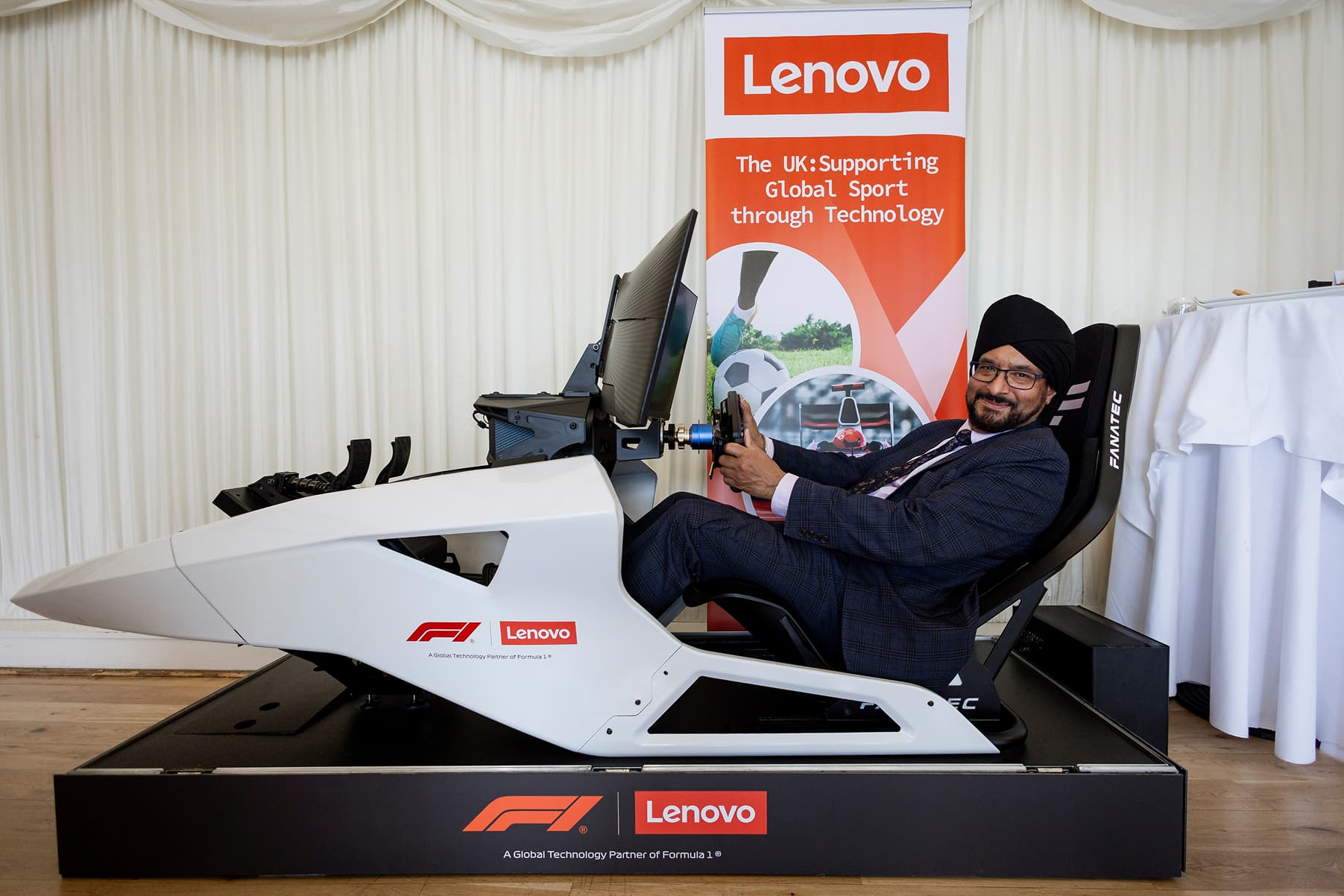
Hosted by Dame Karen Bradley MP, the event brought together leaders from government, technology, sport and innovation to discuss how emerging technologies are supporting some of the world's biggest sporting platforms, including Formula 1 and FIFA World Cup.
While global sporting events were a major focus, the conversation extended far beyond elite competition. A key theme throughout the reception was how sport and technology can create positive impact at every level, from international tournaments and major venues to local teams, regional communities and young people engaging with sport for the first time.
As expectations around live experiences continue to evolve, technology is becoming an increasingly important part of the fan journey. From immersive digital content and interactive displays to AI-powered engagement and real-time analytics, the way audiences experience sport is changing rapidly.
For Aircards Studio, the event provided an opportunity to demonstrate how immersive technology can help organisations create deeper, more meaningful connections with audiences both inside and outside the venue.
The Wider Role of Technology in Sport
Sport has always had the power to bring people together. Whether through local clubs, grassroots participation, national teams or major global events, sport creates shared moments that build identity, pride and belonging.
What is changing is the role technology can play in strengthening those connections.
For government, regional leaders and public sector stakeholders, the opportunity is not simply about improving the fan experience at the highest level of sport. It is also about understanding how technology can support participation, inclusion, youth engagement, health, wellbeing and regional growth.

Interactive and immersive technologies can help make sport more accessible and more engaging, particularly for younger audiences who increasingly expect digital interaction as part of their everyday lives. These tools can encourage people to engage with local teams, discover new sports, participate in community activity and connect with positive experiences in their own regions.This is where the conversation becomes especially powerful.
Technology in sport is not just about what happens inside stadiums or at major tournaments. It can also help inspire young people to get active, support local communities, create new learning opportunities and strengthen the role sport plays in everyday life.
The Next Era of Fan Engagement
At every level of sport, audiences now expect more than passive viewing.
Modern fans want to participate in the experiences surrounding the sports they love. They want personalised content, interactive experiences and opportunities to connect directly with teams, competitions, athletes and brands.
As a result, sports organisations are increasingly exploring new ways to bridge the gap between physical and digital engagement.
This is where immersive technologies are beginning to play a significant role. Technologies such as augmented reality, artificial intelligence, spatial computing, interactive displays and real-time analytics are enabling organisations to create experiences that extend far beyond the traditional event environment.
Rather than simply consuming content, audiences can become active participants within it. This creates stronger emotional connections while opening up new opportunities for rights holders, sponsors, technology partners and public sector organisations looking to deliver meaningful engagement.
For major sporting events, that might mean transforming fan zones into interactive destinations. For regional communities, it might mean using digital experiences to inspire participation, celebrate local teams or bring young people closer to sport in ways that feel relevant to them.
Showcasing the LUX-75 AI-Powered Interactive Display
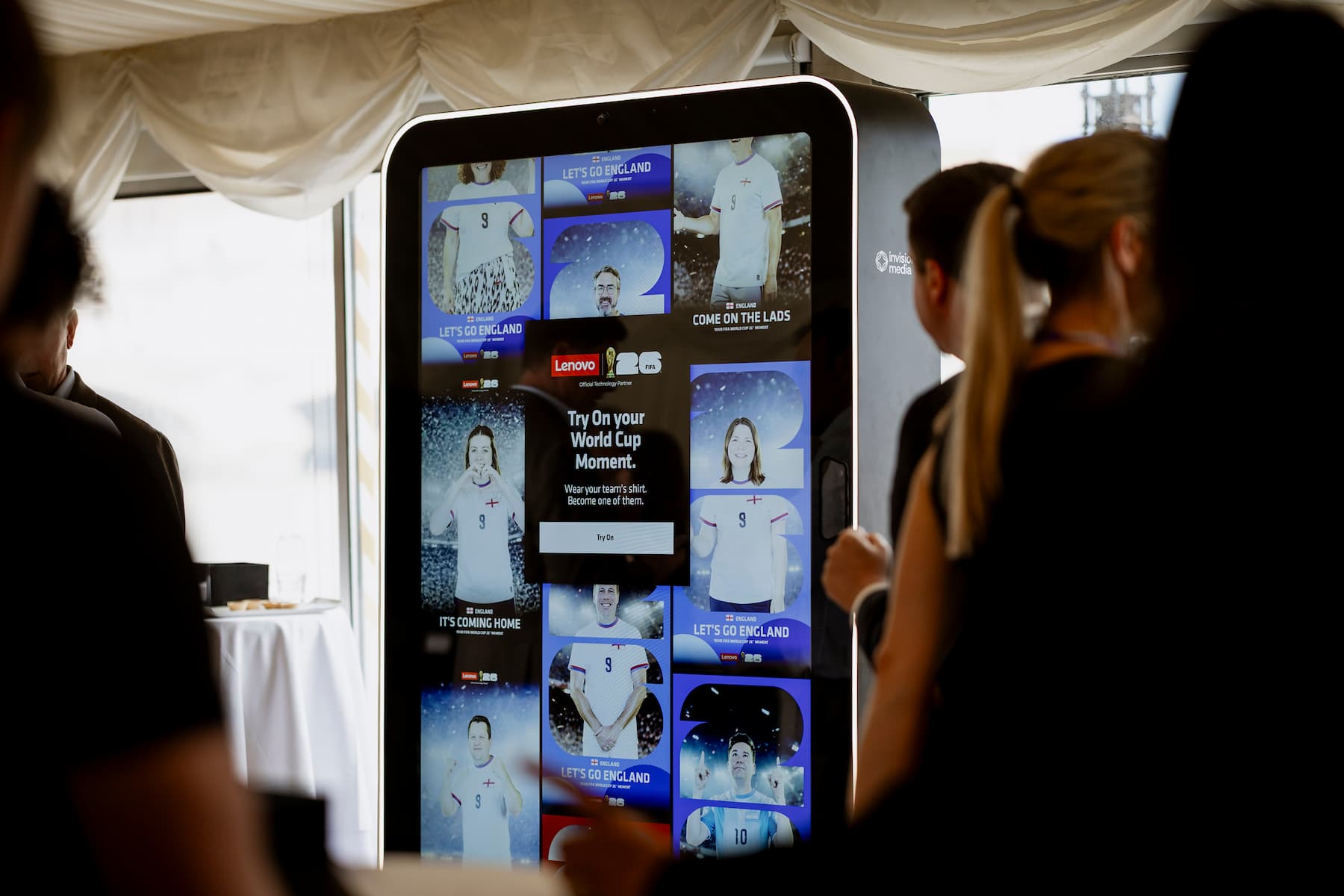
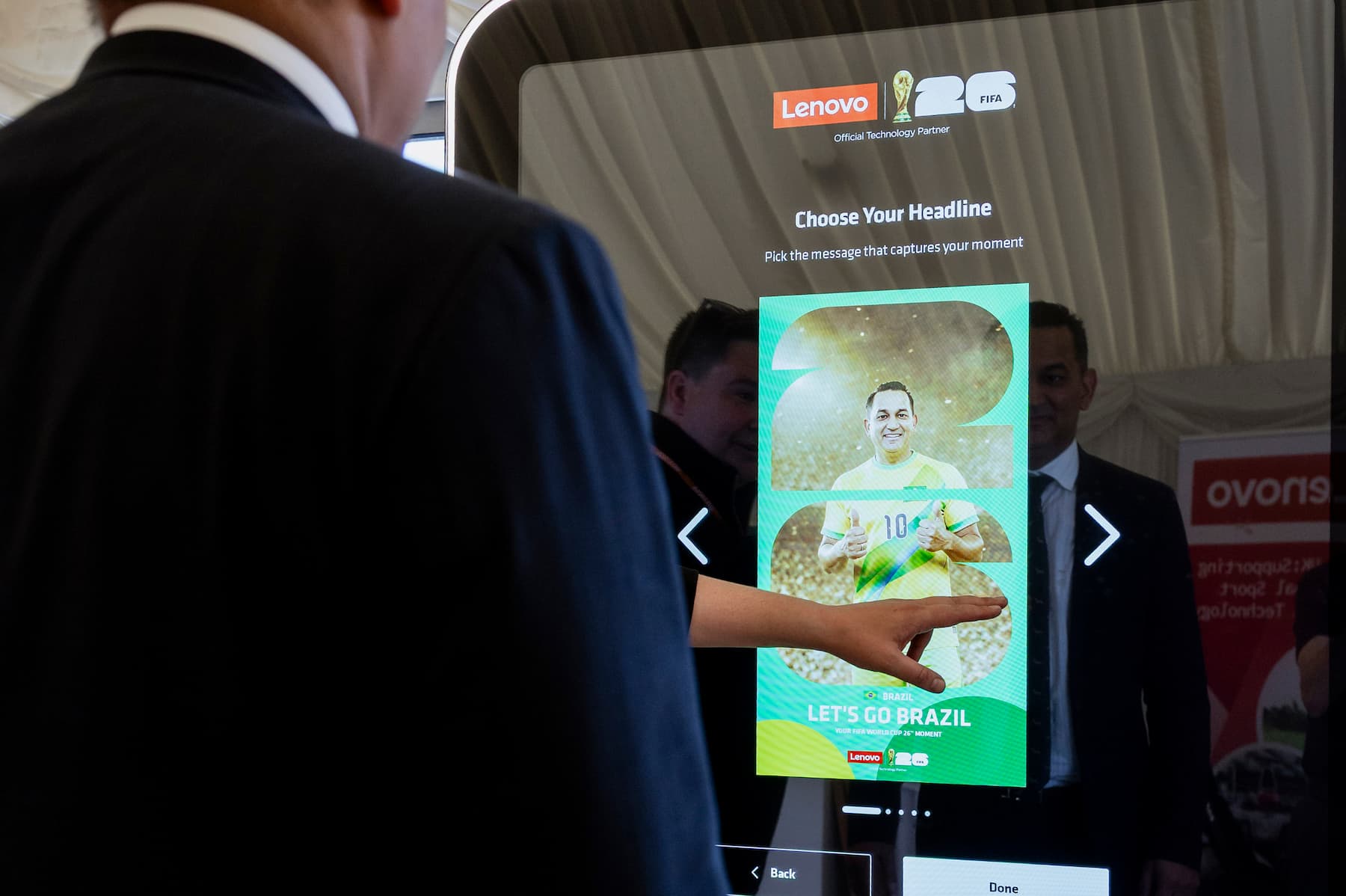
As part of Lenovo's showcase, Aircards Studio demonstrated the LUX-75, the flagship AI-powered interactive display from Invisionary Media, a division of Aircards Studio.
Designed for high-footfall environments, the LUX-75 combines artificial intelligence, interactive content and immersive experiences within a single platform, transforming traditional digital signage into a dynamic engagement channel. Unlike conventional display screens that simply broadcast content, the LUX-75 is designed to encourage participation, using advanced AI, computer vision and interactive technologies to create experiences that respond in real time to audience presence and actions.
The platform has been designed to support a wide range of applications, including:
- Fan engagement experiences
- Interactive brand activations
- Gamified sporting experiences
- AI-powered content interactions
- Personalised photo and social sharing moments
- Sponsorship and commercial activations
- Data-driven audience measurement
For sports organisations and event operators, this creates an opportunity to transform traditionally passive spaces into active engagement environments. Whether deployed in stadium concourses, fan zones, airports, retail locations, community spaces or live events, interactive technology can increase participation, dwell time and engagement while creating more memorable experiences for visitors.
Why Interactive Technology Matters for Sport
The global sports industry is entering a period of significant transformation. While live attendance remains a critical part of the fan experience, audiences are increasingly engaging with sporting content across multiple channels, devices and environments.
Fan engagement is no longer limited to the ninety minutes of play. Instead, it takes place before, during and after events through social media, digital content, live experiences, second-screen interactions and branded activations.

This shift presents both a challenge and an opportunity for sports organisations. Maintaining audience attention in an increasingly crowded digital landscape requires experiences that stand out and offer genuine value to participants.
Interactive technology provides a powerful way to achieve this by moving beyond traditional communication models and creating experiences that actively invite participation. In these environments, fans can become players, spectators can become creators, and physical spaces can be transformed into immersive destinations that encourage exploration and interaction.
This evolution is particularly important for major global events, where sponsors, organisers and host cities are continually searching for new ways to engage audiences and create memorable moments. However, the same principles can also apply at a local level. The ability to make sport feel more interactive, accessible and rewarding has relevance for schools, clubs, community programmes, regional events and public engagement initiatives.
The organisations that successfully blend physical and digital experiences will be best positioned to capture attention, strengthen loyalty and create lasting connections with fans and communities.
AI, Data and the Performance of Sport
Artificial intelligence was another key theme throughout the discussions at the event.
While AI is often associated with productivity and automation, its role within sport is expanding rapidly. At the elite level, AI and real-time data are already helping teams, leagues and event organisers improve performance, operations and audience experiences.

Formula 1 provides one of the clearest examples of this shift. Modern race environments rely on huge volumes of live data flowing from cars, circuits, teams and broadcast systems. That data has to be processed, interpreted and acted upon at speed, often across complex global operations and race calendars.
The discussion highlighted how technology infrastructure, AI and data processing are becoming essential to making sport faster, smarter and more responsive. In Formula 1, this can support everything from performance optimisation and race strategy to fan-facing content, broadcast experiences and operational decision-making.
For audience-facing environments, AI can support a wide range of applications, including:
- Personalised content recommendations
- Real-time audience interactions
- AI-generated visual experiences
- Intelligent wayfinding and assistance
- Dynamic content adaptation
- Audience measurement and analytics
When combined with immersive technologies, AI creates opportunities for experiences that feel genuinely responsive to individual users. Rather than delivering the same content to every audience member, experiences can adapt based on behaviour, preferences and interactions, creating a more relevant and engaging journey for each participant.

This not only strengthens engagement but also provides valuable insights that can help organisations optimise future activations and better understand audience behaviour.
At Aircards Studio, we see AI not as a replacement for creativity, but as a powerful tool that enables richer, more meaningful experiences. The most successful applications of AI will always be those that enhance human connection rather than replace it.
Creating Positive Impact Through Sport Technology
One of the most important takeaways from the event was the potential for sport technology to deliver positive impact beyond the commercial environment.
For public sector leaders and regional representatives, the question is not only how technology can enhance major sporting events, but how it can benefit people and places across the UK.

Sport has a unique ability to reach audiences who may not engage with traditional forms of communication. When paired with immersive technology, it can become a powerful tool for education, participation and community engagement.
This could mean creating interactive experiences that encourage young people to engage with local clubs, using gamified content to make physical activity feel more exciting, or designing digital activations that connect communities to major sporting moments taking place on the global stage.
It could also mean helping regions showcase their role in sport, innovation and creativity, creating new opportunities for local businesses, venues and communities to participate in the growth of the sports technology sector.
The most exciting future for sport technology is not purely about spectacle. It is about using innovation to create experiences that are more inclusive, more participatory and more meaningful.
Collaboration Driving Innovation
One of the most encouraging aspects of the event was seeing such a diverse range of organisations coming together around a shared goal.
Innovation at this scale rarely happens in isolation. It depends on collaboration between technology providers, rights holders, governing bodies, event organisers, brands and public sector stakeholders.

Events like this provide an important platform for those conversations, creating opportunities to share expertise, explore new ideas and identify ways in which technology can improve experiences, drive economic growth and support major sporting events.
Looking Ahead
The future of sport will not be defined solely by what happens on the field, track or court. It will also be shaped by how audiences experience those moments, both in person and through the growing ecosystem of digital and immersive technologies that surround them.
From interactive fan experiences and AI-powered activations to immersive storytelling and data-driven engagement platforms, technology is creating entirely new ways for people to connect with sport.
The conversations taking place at the Houses of Parliament this week demonstrated that this transformation is already well underway, with organisations across government, technology and sport actively exploring how these innovations can create better experiences for audiences around the world.
For Aircards Studio, the opportunity is clear. By combining immersive storytelling, interactive technology and measurable audience engagement, we can help sports organisations, brands, venues and communities create experiences that bring people closer to the moments that matter.
We are proud to be contributing to that future through the work we do across Aircards Studio and Invisionary Media. As the boundaries between physical and digital experiences continue to blur, we remain focused on creating immersive, interactive and impactful experiences that help organisations connect with audiences in more meaningful ways than ever before.
Want to learn more? Explore our services ↗, discover our work ↗ or get in touch ↗ with the team.