Top 10 Immersive Event Experience Ideas To Stand Out


It's clear that live events, expo's and trade shows are getting busier each year, especially post-lockdown world where people crave live experience and interaction. This is of course great for those showcasing at events, but with increased traffic comes increased competition for eyeballs on your brand. Standing out is becoming less about having the biggest booth footprint or the coolest LED-backlit logo, but about creating immersive event experiences that stop people in their tracks and draw them with a brand experience moment that everyone remembers.
Across expos, summits and industry conferences, brands are reinventing what a booth even is. The goal now is to build something truly 'sticky', something that pulls people over through curiosity and keeps them around through interactivity and engagement. From large-format LED and augmented reality to interactive screens, the opportunity for next-level event engagement is there for the taking, you just need to find the right idea, with the right production partner to pull it off. The events and expos that are most memorable aren't classic events or just expo booths, they're immersive experiences.
Let's break down 10 immersive event experience ideas that can help you take the hybrid approach, blending impressive physical event or booth design with digital experience build, so that your brand area becomes the destination at any event.
Why Immersive Event Experiences Are Taking Over
Live experiences are having a real comeback. After years of remote everything, audiences value in-person moments more than ever, the shared energy, connection and sense of spectacle. At the same time, brands are under pressure to prove event spend with deeper engagement and measurable results.
Immersive Event Experiences Bridge That Gap.
Immersive event experiences give visitors something to feel and something to remember, while giving brands longer dwell time, richer interactions and clearer data. Alongside the live experience design, agencies like Aircards Studio design and build both the physical event booth as well as layering in digital experiences to provide longer lasting ROI, beyond just the live event dates. So by taking this hybrid experience approach to your events, expos or trade shows, you're not just providing an amazing live experience for people on the day, but you're also increasing your brand reach possibilities, typically going from hundreds or thousands of people, to millions of people (if done right).
Remember, attention is earned when people get to do something, the most successful booths today turn passive visitors into active participants through immersive, interactive technology.
How To Take The Hybrid Approach To Your Immersive Event Experiences
So let's dive into what exactly goes into building a booth that everyone talks about. A booth that leans into the 'hybrid approach' and in turn, earns footfall, buzz and ROI well beyond traditional trade show/expo booth designs. You can draw crowds easily with immersive visual environments, things like large-scale visual storytelling is one of the fastest ways to turn heads on a crowded show floor. When your booth looks like a world, not a wall, people naturally gravitate toward it.
Some of the most impactful formats include:
1. LED Tunnels & Wraparound Displays
Transport visitors into a branded environment the moment they step inside. LED tunnels and wraparound screens create an immediate sense of immersion, which can be perfect for things like brand launches, product journeys or story-driven experiences. In this example, Aircards Studio, produced a series of immersive content launched at the Outernet London, combining stunning visuals with an engaging Augmented Reality experience that captivaed event attendees.
2. Projection Mapping
Bring cinematic visuals to the booth, from swirling data worlds to hyper-real product stories. This technology is fantastic for low-light or evening events, as the darker the environment, the brighter the projection mapping visuals pop. Ideal for outdoor evening events, and can be deployed across building walls or entire facades.
3. Anamorphic & 3D Illusions
Anamorphic billboard content is fast becoming popular due to the sheer impressiveness and eye-catching nature of this DOOH content. Turn a flat wall into a jaw-dropping moment with a depth illusion on screen that makes people stop in their tracks and watch as 3D content feels as though it's literally emerging from the screen itself. Alas, the 3D content isn't literally 'coming out' of the screen, and instead, this uses clever forced perspective and 3D techniques to make it feel that way. In this example, Aircards Studio produced anamorphic billboard content for Spin Genie's campaign, which was then launched across DOOH screens across Canada.
4. Interactive Screens & LUX-75 Displays
AI-enhanced try-ons, branded mini-games, body-tracked effects, meet-and-greet avatars, intelligent displays like the LUX-75 from Invisionary bring a new layer of engagement to high-traffic spaces. They attract from a distance and deliver conversion up close. LUX-75 interactive screens are available for hire or purchase, and available through Aircards Studio's workshop division, reach out directly for pricing requests.
Adidas partnered up with Foot Locker to launch an in-person event, which included a LUX-75 interactive screen which was then encased in a custom branded cover, the end-result was a highly engaging virtual try on experience that gave attendees the chance to snap a photo wearing a virtual pair of Adidas Originals, as well as snapping and saving a social sharing asset. Super fun, super sharable.
5. AR/VR Experiences
Perfect for expos because they truly draw a crowd. When it comes to AR experiences, visitors can unlock interactive product demos, portals, filters or 3D content by scanning a simple QR code on signage, packaging or print.
Similarly, Virtual Reality can be used effectively to draw crowds at events. Whilst less scalable, as the amount of users at one-time are limited to the amount of headsets available at your booth, they deliver immersive, engaging and often highly narrative driven experiences to people which leave a lasting impression.
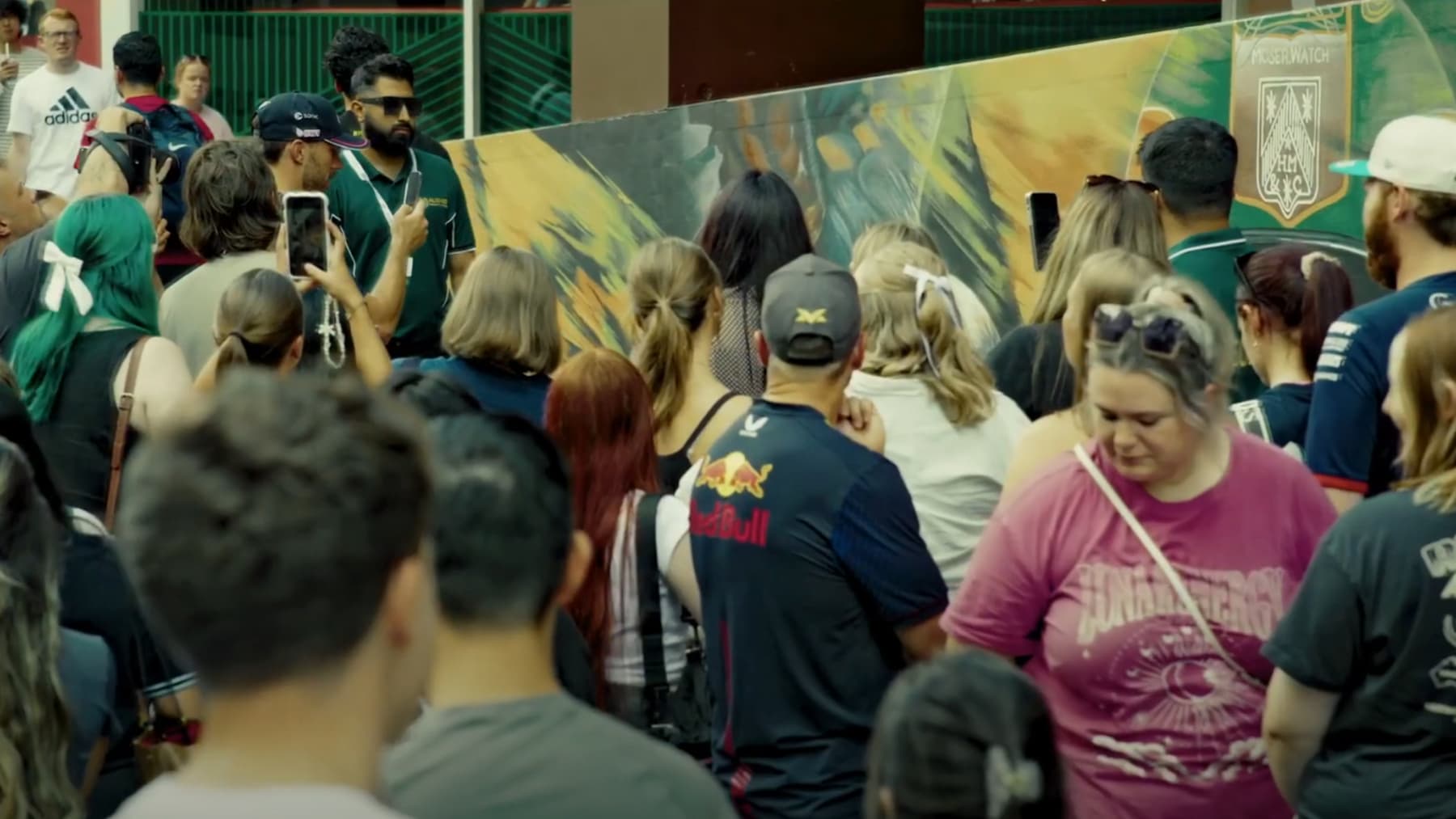
Binance launched an AR experience which was activated from QR code painted onto a custom painted mural in Brisbane, Austrialia, for the luanch of the Binance x Gasly sponorship. The Augmented Reality experience brought the mural to life, and gave F1 fans a glimpse at Gasly's new helmet design for the 2024/5 season.
6. Magic Mirrors
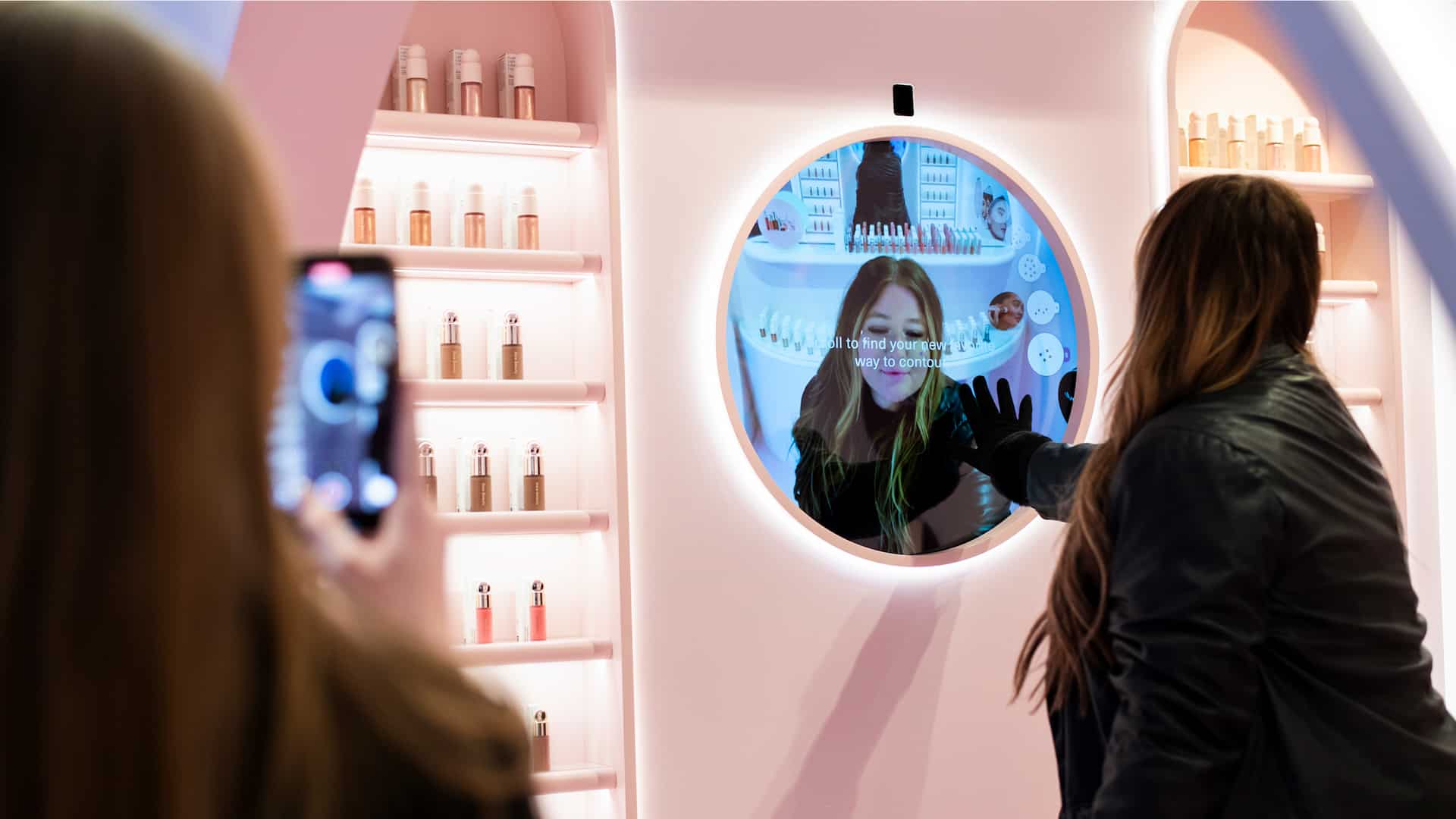
Ideal for beauty, retail, lifestyle and entertainment brands, AR magic mirrors blend physical reflection with digital effects, enhancing try-ons, character moments or product storytelling in a way that feels personal and premium. In 2025, Sephora and Rare Beauty launched an AR Beauty Mirror which gave visitors the chance to have a go and learn about perfect contouring methods, through AR effects applied to their face.
7. Gamified Interactions
Scavenger hunts, challenges, AR collectibles or mini-games all boost dwell time and spark healthy queues (a good problem to have at any trade show). Interactivity turns curiosity into conversation and conversations into leads. Red Bull are a fantastic example of brands daring to do things different, and go beyond traditional advertising or engagement campaigns. In this example, Red Bull teamed up with Fabio Wibmer to roll out an AR mini game which was activated directly from the real Red Bull can!
8. AR Product Demos
Let visitors place 3D models, explore features or step inside the product world. This works especially well for products too large, complex or premium to physically bring to the show.
9. VR or MR Brand Stories
VR for deep, guided storytelling. MR for blending the real booth with digital layers. Either way, it delivers a memorable, cinematic moment that visitors talk about.
10. Photo & Video Moments
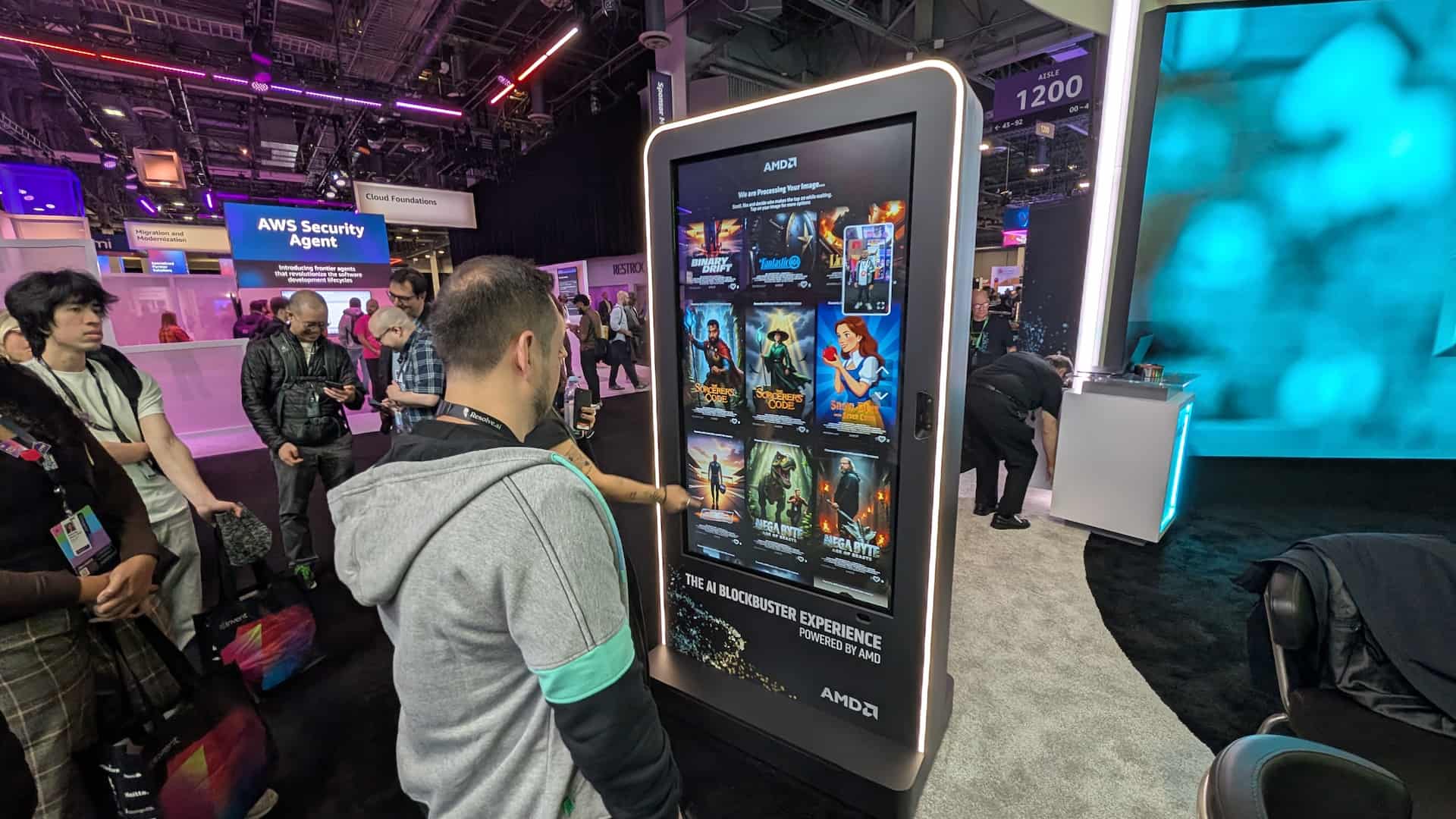
People love leaving an expo with something worth posting. AR effects, branded lenses, immersive backdrops or LUX-75 photo captures turn every visitor into a creator, boosting reach far beyond the walls of the booth.
Shared content = free media. A perfect example of this came from AMD, with their AI Blockbuster Experience launched at AWS re:Invent 2025. The experience, created by Aircards Studio in partnership with Sounds Fun, gave users the opportuntiy to snap a photo, and watch as their photo is transformed using generative AI into their very own epic blockbuster movie poster. It featured 8 different themed categories, from Action to Fantasy, this experience engaged event attendees and really showcased the power of immersive technology when used in a way that deliver an engaging, personalised experience.
Use Fabrication to Anchor the Experience in the Real World
Digital engagement is powerful, but pairing it with physical build is where brands unlock the next level. With in-house fabrication, Aircards Studio creates physical environments designed specifically to integrate digital layers, from custom-built Magic Mirror housings to interactive structures, LED tunnels, simulators and modular pop-ups. This integrated approach solves the biggest challenge brands face at expos: multiple vendors, fragmented execution and disjointed experiences.
When creative, digital and fabrication are designed together, the booth becomes one cohesive world and not a patchwork of suppliers.
Measure What Actually Matters
Events used to be hard to quantify, but with tools like Metalitix, every interaction becomes data:
- Dwell time
- Interaction hotspots
- Visitor flow
- Content engagement
- Demographics
- Call-to-action performance
- Post-event retargeting
This means immersive event experiences don't just feel better, they perform better. You can measure return on experience with clarity.
What's Next for Immersive Event Experiences
The future of event engagement will blend physical craft and digital intelligence in ways we've only just begun to explore. Real-time AI, spatial computing, large-scale LED, intelligent DOOH and WebAR/VR will continue to shape how brands show up at expos.
The brands who win will be the ones who create spaces people want to be in, not just walk past. If you're looking to build the booth everyone talks about, the one that drives footfall, leads and a whole lot of buzz, Aircards Studio can help bring that world to life.
Want to learn more? Explore our services ↗, discover our work ↗, or get in touch ↗ with the team.