The World Cup Won't Be Won in the Stadium



Most of what you’ll read about technology at the 2026 World Cup will focus on the technology itself, the AI, the broadcast innovation, the infrastructure and the data. It's the easy story but it’s also mostly the wrong one.
The biggest brand opportunity at this World Cup isn’t on the pitch, and it isn't in the stadium at all. It's everywhere around it.
A global audience in the billions will experience this tournament, but a fraction of those people will actually sit in a stadium seat. The rest will live it from fan zones, transport hubs, high streets, bars, living rooms and public squares, across dozens of countries, for the better part of two months.
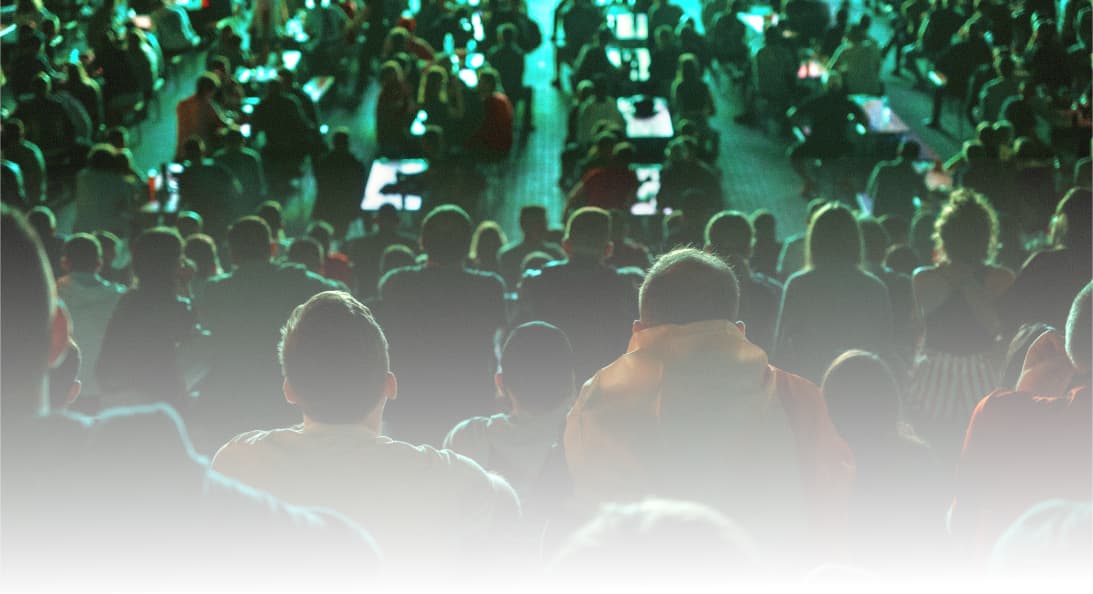
That isn’t a single event in three host nations. It’s a global behaviour pattern. People gather, travel, shop, watch together, buy merchandise and express their identity and belonging on a scale very few cultural moments can match. Brands that plan only for the venue and the broadcast are bidding for the smallest part of it.
To understand why, it helps to start with what’s happened to spectacle itself.
Spectacle Is Now the Baseline
For years, the route to standing out was to be more immersive, more eye-catching, more technically ambitious than the brand beside you. That advantage is eroding, not because immersive experiences stopped working, but because they stopped being rare. The word “immersive” now gets attached to everything from a warehouse light show to a headset demo on a trade stand, and when a term describes everything, it signals nothing.

The serious money has already moved. Disney is investing around $60 billion in its experiences business over the next decade. Universal opened the $7 billion Epic Universe in May 2025, its parent company's biggest-ever theme park bet. Capital at that scale raises the floor. Rich, interactive experience is becoming the baseline expectation, not the differentiator.
For a World Cup sponsor, that carries an uncomfortable implication. A spectacular activation that everyone can see is no longer how you stand out. It's the price of entry. A logo on a perimeter board still has value, and broadcast reach still matters, but they are fast becoming the cheapest things a sponsor can buy, precisely because anyone can buy them. Visibility has been commoditised.
So if being seen is no longer enough, what actually makes a brand stand out?
Now It Comes Down to Participation and Proximity
Participation matters more than ever, because today’s audiences want a role inside a brand, not just a view of it. They expect to interact, personalise, contribute and share. This is the shift from sponsorship as exposure to sponsorship as participation, and it changes what "engagement" is allowed to mean. The questions worth asking are now behavioural and commercial rather than cosmetic. They are about whether people spent real time with something, whether they made or shared it, and whether it drove product discovery, intent or data capture.
It also reframes the AI conversation. The interesting question isn't how brands will use AI at this World Cup. It's what AI lets fans do. As a back-end tool, AI optimises and automates. As an experience layer, it hands the audience a creative part to play and that is where it earns its place.
We saw this with the Puma AI Kit Design Generator, which we built for Puma and Olympique de Marseille in collaboration with FTR. It let supporters design their own club-inspired kits from simple prompts, rendered in real-time 3D across mobile and desktop. More than 120,000 personalised shirts were created in the first few days.
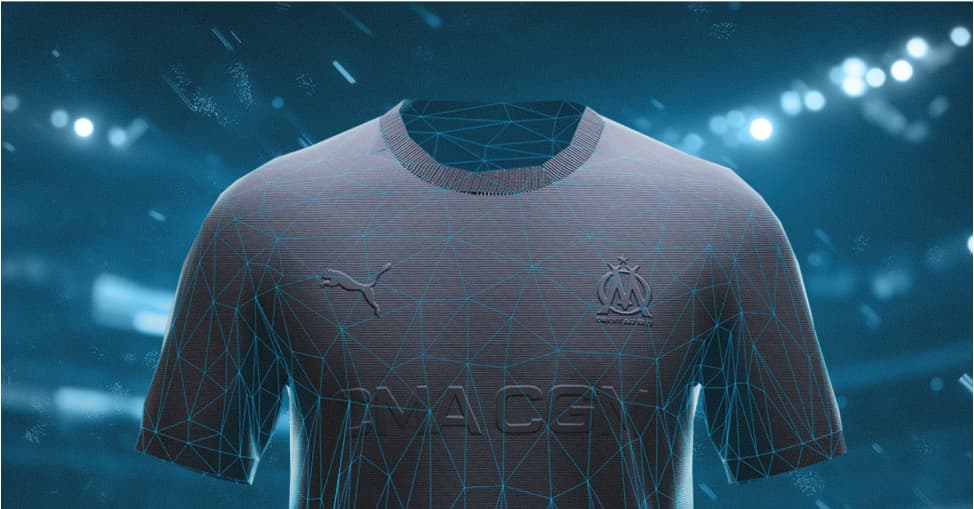
That isn’t a campaign people watched. It's one they made something inside, a way to express identity and allegiance, the real currency of football. AI is at its most powerful when it moves from novelty to participation, allowing audiences to be involved rather than admire the technology. Proximity is where participation meets the wider opportunity. An experience like that isn’t bound to a stadium. It travels to wherever the fan already is, and that is the strategic point.
When the opportunity lives everywhere around the tournament rather than inside it, the experiences that win are the ones that can show up in a retail destination, a fan zone, a transport hub or on a phone, at the scale of the global audience rather than the ticketed one.
They are hybrid by design, physical and digital working as one connected system rather than two separate line items, because that is the only way to follow audiences who don't think in channels.
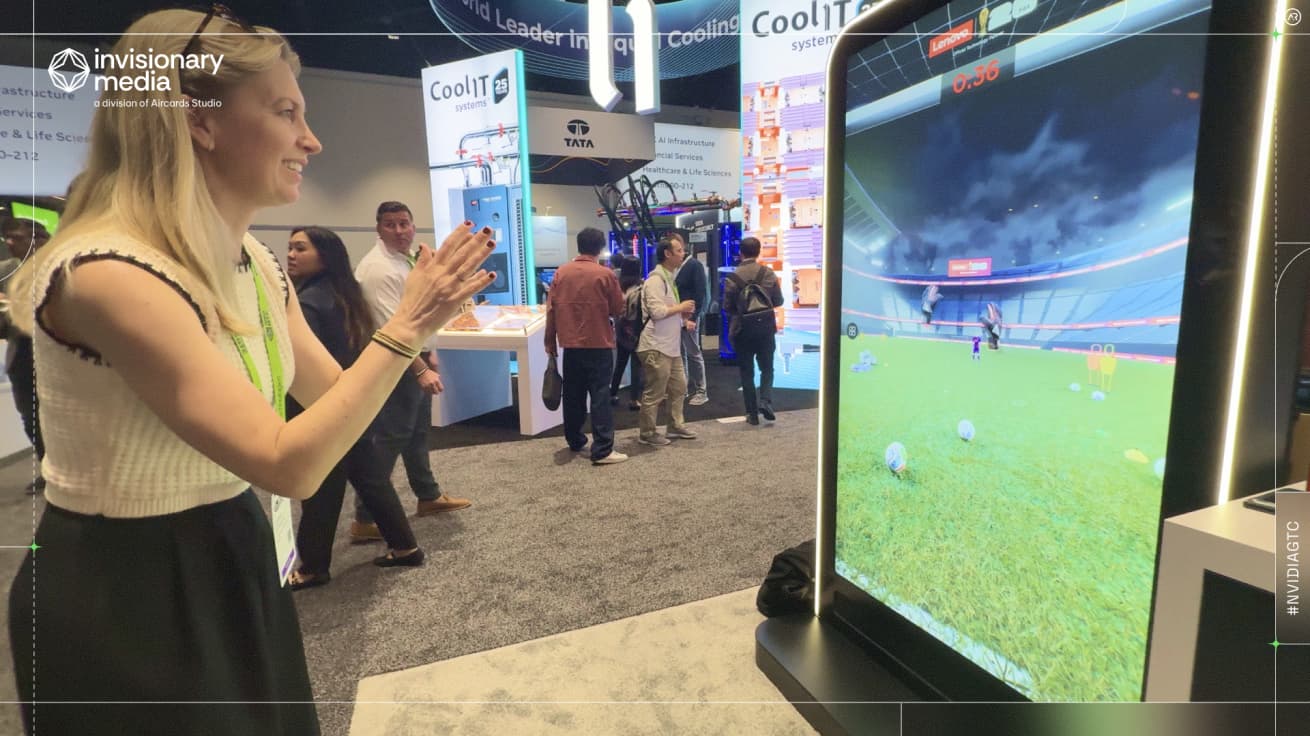
Increasingly that means putting intelligence into the physical environment itself. Through Invisionary Media, a division of Aircards Studio, we've launched an AI-powered fan-engagement platform built on our LUX-75 displays with Lenovo, Intel and Newcastle United. It turns stadium and retail spaces into interactive environments where fans step up to a gesture-controlled Goalkeeper Challenge and save penalties in real time, or use an AI-powered virtual try-on to see themselves in WC inspired kits.
Underpinned by Lenovo compute and Intel's AI hardware, it is built for real-time, interactive participation in demanding, high-footfall spaces.
That changes what a display is. It stops broadcasting at people and starts responding to them. It is no longer signage but a retail touchpoint, an entertainment moment and an engagement engine, sited exactly where the everyday audience already moves...
...which brings us to the part most of the industry would rather not discuss.
The Uncomfortable Part
For all the talk of experience, physical activations have long struggled to show what actually happened inside them. You could count footfall, estimate reach and tally scans, but understanding how people actually behaved, what held their attention and what converted, was largely guesswork. The whole industry agrees this is the problem. Far fewer have built a credible answer to it.
This is the line we’d argue hardest and the one most likely to divide a room. An experience you can't measure is merely expensive decoration. And measurement can no longer be a report you commission after the fact. It has to be designed into the experience from the start, as architecture rather than afterthought.
That’s the role of Metalitix, the spatial analytics division of Aircards Studio. Its Real-World Analytics capture behaviour inside physical environments, from dwell time and interaction rates to engagement patterns, demographic signals and the paths people actually take.
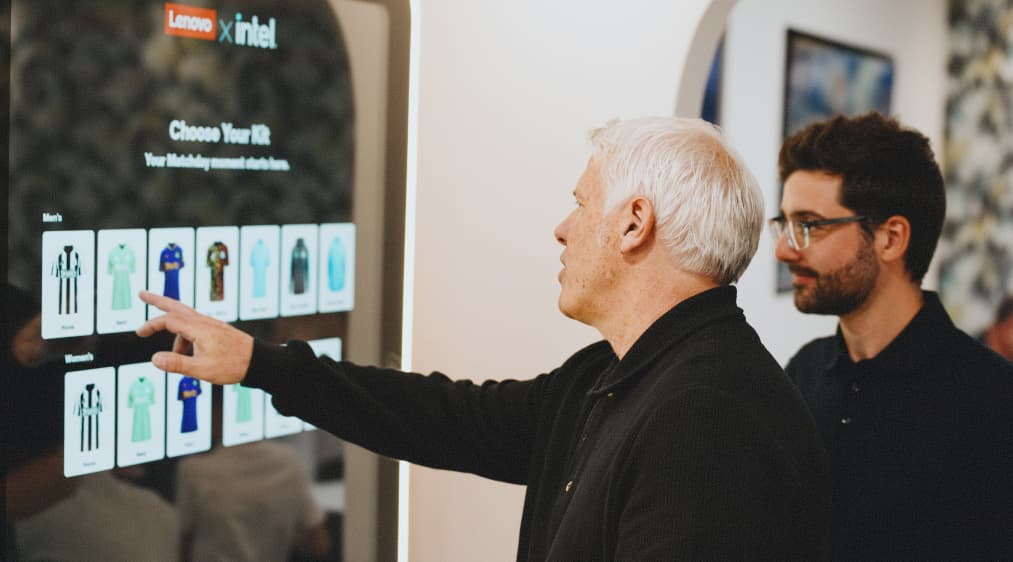
Across the Newcastle United deployment, that means clubs, sponsors and partners can move past whether an activation looked good to understanding how it performed. The commercial value sharpens immediately.
The future will not belong to the brands that build the most impressive thing. It will belong to the ones that can understand it, optimise it and prove it.
What This Means for Brands
Put the three together and the picture is hard to miss. Spectacle is now the baseline, not the difference. What makes the difference is participation people can genuinely take part in, delivered wherever they already are and backed by real evidence of what worked. None of this is unique to football. It’s where retail, live events, hospitality, tourism and experiential marketing are all heading. The World Cup simply makes the direction easier to see.

For brands, the takeaway isn't to reach for more technology. It’s to use technology where it has a clear job, to deepen participation, to extend reach beyond the venue and to prove commercial value. That’s a harder standard than visibility and it’s the one more briefs will be judged against.
It's also why our model is built the way it is. Creative production, AI-powered interactive displays and spatial analytics aren’t separate services stitched together after the fact. They’re one connected system, under one accountable partner, because experiences that are conceived, built and measured together are the ones that actually perform.
The World Cup will make all of this visible at scale, but none of it ends with the final whistle. In retail, in fan zones, across connected physical and digital environments, the brands that come out ahead will be the ones that design for participation and proof, not just attention.
Let's build what comes next. Explore our services ↗, discover our work ↗ or get in touch ↗ with the team.